
Sustainable organic growth only happens when SEO is treated as a connected system, not a checklist. Technical fixes without content stall. Content without authority fades. Links without intent decay. End-to-end SEO works because every moving part reinforces the next.
Anyone who’s been burned by short-term SEO wins knows the feeling. Rankings spike. Leads trickle in. Then—nothing. The traffic drops, budgets get questioned, and SEO gets blamed. The issue usually isn’t Google. It’s fragmentation.
Why piecemeal SEO keeps letting businesses down
Most SEO failures don’t come from bad tactics. They come from isolated ones.
A technical audit here. A content sprint there. A link campaign run months later by someone who never saw the strategy. Each piece looks sensible on its own, but together they don’t compound.
From a behavioural lens, this is classic effort justification bias. Teams invest time in visible actions and assume progress must follow. Google doesn’t reward effort. It rewards alignment.
End-to-end SEO fixes this by designing every activity to stack, reinforce, and compound over time.
What does “end-to-end SEO” actually include?
End-to-end SEO isn’t about doing more. It’s about doing fewer things with intention and sequence.
At a high level, it connects five core layers:
Technical foundations that remove friction for users and crawlers
Search-led content built around real decision-making intent
Authority signals that validate credibility
On-page optimisation that sharpens relevance
Measurement that links rankings to revenue, not vanity metrics
Miss one layer and the system leaks value.
How technical SEO quietly controls growth ceilings
Technical SEO rarely excites anyone. That’s exactly why it matters.
Site speed, crawlability, indexation, internal linking, mobile usability—none of these win awards. But they set the ceiling for everything else. If Google struggles to understand or trust your site structure, no amount of content polish saves you.
Anyone who’s migrated a site without a technical plan knows how fragile rankings can be. One misplaced redirect. One bloated JavaScript framework. Traffic evaporates overnight.
Strong technical SEO doesn’t chase perfection. It removes friction. Less friction means faster indexing, clearer signals, and fewer ranking losses over time.
Why content must follow behaviour, not keywords
Content that ranks and content that converts are rarely written the same way.
End-to-end SEO starts by mapping how people actually search when they’re deciding—not just what they type. Early questions, comparison queries, reassurance searches, late-stage intent. Each needs a different content job.
This is where many brands overproduce blogs and underperform commercially. They answer questions without moving behaviour.
Behaviour-led content does three things well:
Reduces uncertainty
Signals authority without shouting
Helps users feel they’re making a smart decision
That’s Cialdini’s authority and liking principles working quietly in the background.
Authority building: the slow lever most brands rush
Links still matter. But not in the way many people think.
Authority isn’t about volume. It’s about validation. One credible mention in the right context often outweighs dozens of generic placements.
End-to-end SEO treats authority as a long game. Digital PR, expert commentary, brand mentions, and strategic partnerships all feed trust signals Google already understands.
This is where social proof plays its role. When respected sites reference your insights, Google—and users—borrow that trust instantly.
For a practical breakdown of how Google evaluates these signals, Google’s own documentation on Search Essentials remains one of the clearest references.
On-page optimisation is where strategy becomes visible
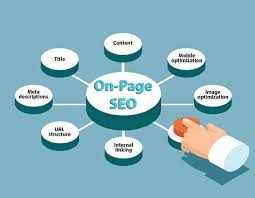
On-page SEO is often mistaken for keyword placement. In reality, it’s where relevance gets clarified.
Headings, internal links, schema, copy structure, and calls-to-action all help Google—and users—understand what a page is for and who it’s for.
This is also where choice architecture matters. Clear hierarchy reduces cognitive load. Users stay longer, engage more, and send the behavioural signals algorithms quietly watch.
Well-optimised pages don’t feel optimised. They feel obvious.
Measurement that doesn’t lie to you
Rankings alone don’t grow businesses. They just make dashboards look busy.
End-to-end SEO measures what actually matters:
Non-branded organic conversions
Assisted revenue from organic sessions
Content paths that lead to enquiries
Keywords that influence decisions, not just traffic
This taps into commitment and consistency. When stakeholders see steady, attributable progress, SEO earns patience—and patience is what allows compounding to happen.
Why sustainable growth always feels slower at first
Here’s the uncomfortable truth: end-to-end SEO often feels slower in the first three to six months.
That’s because you’re building foundations instead of chasing spikes. Behaviourally, humans hate delayed rewards. Loss aversion kicks in. Teams get twitchy.
But once the system locks in, growth becomes boring—in the best way. Traffic rises without weekly firefighting. Content continues working months after publication. Authority accumulates quietly.
That’s not luck. That’s system design.
Common questions businesses ask before committing
How long does end-to-end SEO take to work?
Early signals often appear within three months. Meaningful, defensible growth typically shows between six and twelve, depending on competition and starting point.
Is this approach suitable for small businesses?
Yes—arguably more so. Smaller sites benefit faster from clarity, focus, and proper sequencing than from scattergun tactics.
Does paid search replace any of this?
Paid search can complement SEO, but it doesn’t replace trust, authority, or organic visibility. Once ads stop, so does traffic. SEO compounds.
The quiet advantage most competitors won’t build
Most businesses still treat SEO as a channel. End-to-end SEO treats it as infrastructure.
That difference shapes everything—from how content is briefed to how success is judged. And it’s why some brands steadily pull away while others keep resetting.
If you’re looking at SEO as a long-term asset rather than a short-term tactic, a clear explanation of how comprehensive services support organic search growth helps frame what sustainable progress actually looks like.
Because in the end, the cost of fragmented SEO isn’t just wasted spend. It’s the growth you never get back.









Write a comment ...